
DevOps Engineer: Responsibilities and Learning Plan
Explore DevOps engineering responsibilities, essential technical skills, automation tools, CI/CD pipelines, cloud platforms and a practical learning roadmap for beginners.
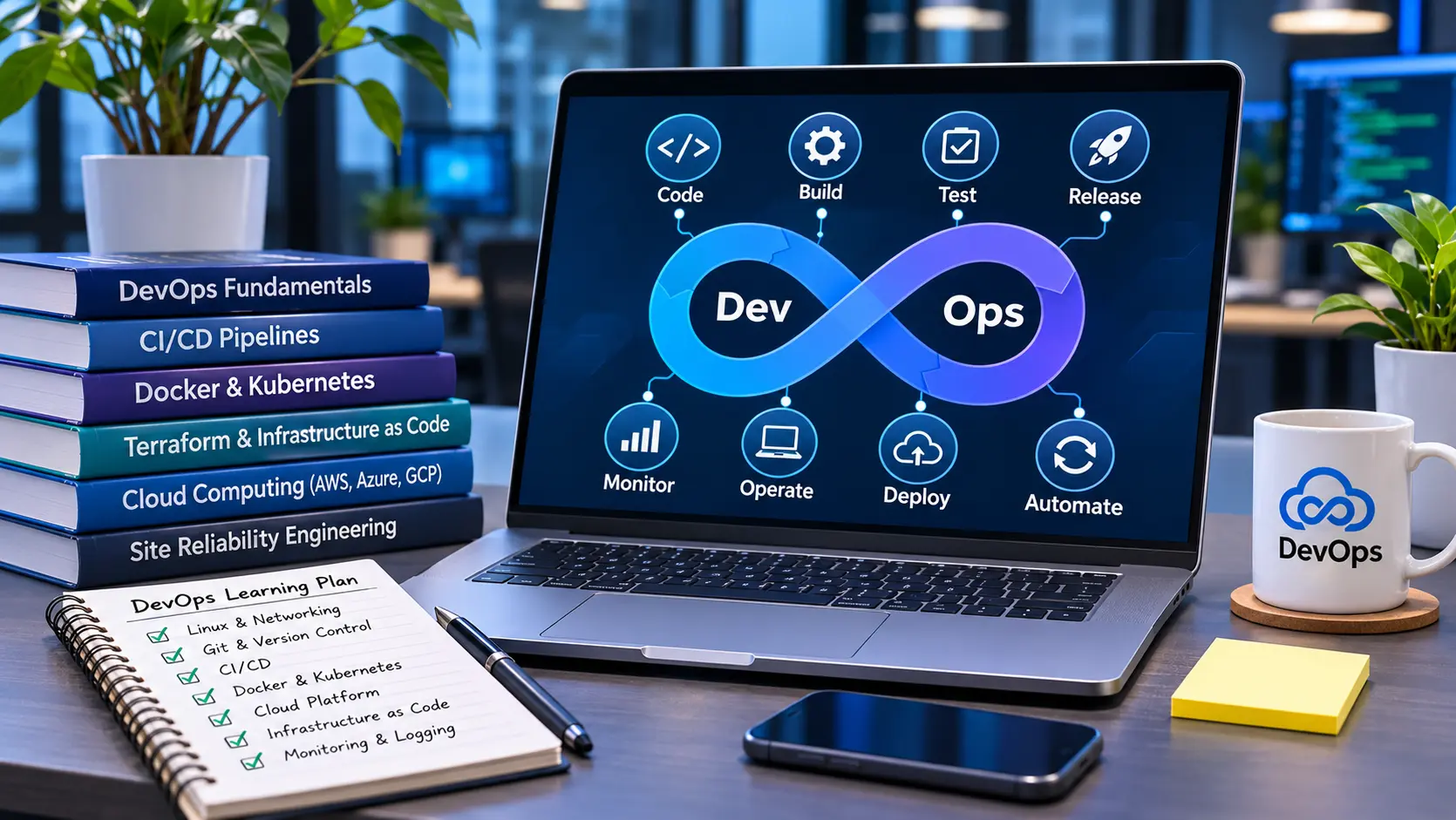
DevOps Engineer: Responsibilities and Learning Plan
DevOps engineering is an important career path in modern software development and IT operations. A DevOps engineer helps development and operations teams work together to build, test, release and maintain software more efficiently. The role combines software development practices, infrastructure management, automation, cloud computing and system reliability.
As organizations increasingly rely on digital services, they need professionals who can improve deployment processes, automate repetitive tasks and maintain reliable systems. Learning DevOps requires a combination of technical knowledge, practical projects and an understanding of how software moves from development to production.
1. What Is DevOps Engineering?
DevOps is a set of practices, tools and cultural principles that connects software development (Dev) with IT operations (Ops). Its purpose is to improve collaboration, shorten software delivery cycles and maintain the stability of applications and infrastructure.
A DevOps engineer helps automate software delivery processes and creates systems that allow teams to release updates consistently. Instead of relying on manual tasks, DevOps practices use automation, monitoring and repeatable workflows.
Main Goals of DevOps
2. What Does a DevOps Engineer Do?
A DevOps engineer works across development, infrastructure and operations. Daily responsibilities depend on the organization, technology stack and experience level. Some professionals focus on CI/CD pipelines, while others specialize in cloud infrastructure, automation, containers or reliability engineering.
Build and Release Automation
DevOps engineers create automated workflows that compile code, run tests and prepare software for release. These workflows help teams deliver updates consistently and identify problems earlier in the development process.
Continuous Integration and Continuous Delivery
Continuous Integration (CI) allows developers to integrate code changes regularly and run automated checks. Continuous Delivery or Deployment (CD) extends the process by preparing or releasing validated software through automated pipelines.
Infrastructure Management
DevOps engineers provision and maintain the infrastructure required by applications. This can include virtual machines, cloud resources, storage, networks, databases and container platforms.
Configuration Management
Configuration management helps maintain consistent settings across servers and environments. Tools and automation scripts can reduce configuration differences between development, testing and production systems.
Monitoring and Troubleshooting
DevOps engineers monitor application performance, infrastructure health and deployment activity. When a service experiences problems, they investigate logs, metrics and system behavior to identify the cause.
Security and Reliability
Security practices are increasingly integrated into software delivery. DevOps engineers may help manage access permissions, protect secrets, apply updates and introduce security checks into automated pipelines.
3. Essential Skills for DevOps Engineers
DevOps requires knowledge across several technical areas. Beginners do not need to master every tool immediately. A structured learning approach helps build a strong foundation before moving into advanced automation and cloud technologies.
Linux and Operating Systems
Linux is widely used in cloud infrastructure and server environments. Learn how to navigate the command line, manage files, understand permissions, inspect processes, configure services and review system logs.
Networking Fundamentals
Networking knowledge helps DevOps engineers understand how applications communicate. Important topics include IP addressing, DNS, HTTP and HTTPS, ports, firewalls, routing, load balancing and network troubleshooting.
Programming and Scripting
Basic programming knowledge helps automate tasks and understand application workflows. Python, Bash and PowerShell are useful languages for scripting, administration and automation.
Git and Version Control
Git allows developers to track code changes, work with branches and collaborate on shared projects. DevOps engineers should understand repositories, commits, merging, pull requests and conflict resolution.
Cloud Computing
Cloud platforms provide computing, storage, networking and managed services. Understanding cloud concepts helps DevOps engineers deploy and manage applications without relying only on physical servers.
Containers and Orchestration
Containers package applications and their dependencies into portable environments. Container orchestration platforms help manage application deployment, scaling, networking and recovery across multiple machines.
Problem-Solving and Communication
DevOps engineers need to investigate complex technical issues and communicate solutions clearly. Collaboration is essential because the role connects developers, system administrators, security professionals and business teams.
4. Important DevOps Tools and Technologies
DevOps teams use different tools for source control, automation, infrastructure management, deployment and monitoring. The exact tools depend on the organization's environment.
Git
Git is a version control system used to track changes in source code and configuration files. It supports collaboration and provides a history of project development.
Jenkins
Jenkins is an automation server commonly used to create CI/CD pipelines. It can connect with source code repositories, testing tools and deployment environments.
Docker
Docker is a platform for building and running containers. It helps package applications with their dependencies so they can run consistently across different environments.
Kubernetes
Kubernetes is a container orchestration platform. It helps manage containerized applications, including deployment, scaling, service discovery and recovery.
Terraform
Terraform is an infrastructure-as-code tool that allows teams to define and manage infrastructure through configuration files. It supports repeatable infrastructure provisioning.
Ansible
Ansible is an automation tool used for configuration management, application deployment and infrastructure tasks. It can help maintain consistent configurations across multiple systems.
Cloud Platforms
Monitoring Tools
5. Understanding CI/CD Pipelines
CI/CD pipelines are a central part of many DevOps workflows. They automate the steps required to move code changes from a development repository toward a testing or production environment.
Typical Pipeline Stages
Automated pipelines improve consistency and reduce the effort required for routine releases. They also provide teams with faster feedback when a code change causes a problem.
6. DevOps vs Traditional IT Operations
Traditional development and operations workflows may involve separate teams with different responsibilities. DevOps encourages closer collaboration and automation across the software lifecycle.
| Area | Traditional Approach | DevOps Approach |
|---|---|---|
| Team collaboration | Development and operations may work separately | Teams collaborate throughout delivery |
| Deployment | May involve many manual steps | Uses automated pipelines where appropriate |
| Testing | May happen later in the release process | Automated checks can run throughout development |
| Infrastructure | May rely heavily on manual configuration | Can use infrastructure as code and automation |
| Feedback | May arrive after longer release cycles | Frequent feedback supports continuous improvement |
| Monitoring | May focus mainly on operational systems | Monitoring informs development and operations decisions |
7. How to Become a DevOps Engineer
People entering DevOps should follow a learning plan that develops foundational IT knowledge before introducing advanced infrastructure automation. The following roadmap provides a practical sequence for beginners.
Step 1: Learn Operating System Fundamentals
Start with Linux basics and understand how servers operate. Practice file management, permissions, processes, services, package installation and command-line troubleshooting.
Step 2: Understand Networking
Learn IP addresses, DNS, HTTP, HTTPS, ports, firewalls and basic routing. Practice diagnosing connectivity problems and understanding how applications communicate over networks.
Step 3: Learn Git
Create repositories, commit changes, work with branches and collaborate through pull requests. Store sample scripts and project configuration files in version control.
Step 4: Learn a Scripting Language
Choose Python or Bash as a starting point. Practice variables, conditions, loops, functions, file operations and simple automation tasks.
Step 5: Understand Cloud Computing
Choose one major cloud platform and learn its basic services. Practice creating virtual machines, storage resources, networks and access permissions in a controlled environment.
Step 6: Learn Docker
Build a simple application image, run containers and understand Dockerfiles, images, volumes and container networking.
Step 7: Build a CI/CD Pipeline
Connect a sample project to a pipeline tool. Automate basic build and test steps, then learn how deployments can be prepared for a test environment.
Step 8: Learn Infrastructure as Code
Practice defining infrastructure through configuration files using a tool such as Terraform. Learn how to review changes before applying them.
Step 9: Explore Kubernetes
After understanding containers, learn Kubernetes fundamentals such as pods, deployments, services and configuration. Begin with a local learning environment before working with production infrastructure.
Step 10: Build a Portfolio
Create practical projects that demonstrate automation, containerization, deployment and monitoring. Document the problem, tools used, setup process and results.
8. Practical DevOps Projects for Beginners
Projects help learners connect theoretical knowledge with real workflows. Start with small projects and gradually increase their complexity.
Project 1: Automate a Simple Backup
Write a Bash or Python script that copies selected files to a backup location. Add logging and test the restoration process.
Project 2: Create a Dockerized Web Application
Choose a small web application, create a Dockerfile and build a container image. Run the application locally and document the steps required to reproduce the environment.
Project 3: Build a Basic CI Pipeline
Connect a sample application to a Git repository and configure an automated workflow that runs tests whenever code changes are submitted.
Project 4: Deploy an Application to the Cloud
Deploy a small test application using a cloud platform. Configure access permissions, networking and basic monitoring. Use a limited test environment and review costs before creating resources.
Project 5: Create a Monitoring Dashboard
Collect sample system metrics and create a dashboard showing resource usage and service health. Learn how monitoring data can help identify performance problems.
Project 6: Manage Infrastructure with Code
Use Terraform to define a small test environment. Practice reviewing configuration changes and safely creating or removing resources.
9. Education and Certifications
DevOps employers may consider candidates with backgrounds in computer science, software engineering, information technology or related fields. However, requirements vary. Practical experience, technical projects and knowledge of relevant tools are also important.
Certifications can provide structured learning and demonstrate knowledge in particular areas. Possible options include:
Certification programs and exam requirements can change. Check the official provider websites before selecting a course or booking an examination.
10. DevOps Career Roles and Progression
DevOps is a broad field with several related job titles. Responsibilities differ between organizations, and some positions combine multiple areas of infrastructure and software delivery.
11. Salary and Job Opportunities
DevOps salaries vary according to country, experience, company size, cloud expertise and the complexity of the infrastructure being managed. Entry-level positions may focus on assisting with pipelines and routine infrastructure tasks, while experienced professionals may design automation platforms and manage large production environments.
DevOps professionals work in software companies, financial services, e-commerce, telecommunications, healthcare, cloud service providers, consulting firms and organizations that operate digital platforms.
When evaluating job opportunities, review the technologies, responsibilities, required experience, on-call expectations and training opportunities listed by the employer. Job titles can differ significantly between organizations.
12. Common Challenges in DevOps
DevOps work can involve complex technical and organizational challenges. Understanding these difficulties helps beginners prepare for the realities of the profession.
13. Future of DevOps Engineering
DevOps continues to evolve as organizations adopt cloud platforms, container technologies, automation and more complex software architectures. Infrastructure as code, platform engineering, security automation and site reliability practices are important areas of development.
Artificial intelligence is also influencing operational workflows through assistance with log analysis, incident investigation and repetitive tasks. However, engineers still need to understand system behavior, verify automated recommendations and make responsible decisions about production infrastructure.
Professionals who develop strong foundations in operating systems, networking, scripting, cloud platforms and automation can adapt more effectively as tools and industry practices change.
14. Tips for Building a Successful DevOps Career
Frequently Asked Questions
1. What does a DevOps engineer do?
A DevOps engineer helps automate software delivery, manage infrastructure, maintain CI/CD pipelines and improve application reliability. The exact responsibilities depend on the organization.
2. Can beginners become DevOps engineers?
Yes. Beginners can work toward DevOps roles by learning Linux, networking, Git, scripting, cloud computing and automation. Practical projects can help demonstrate their skills.
3. Is coding required for DevOps?
DevOps does not always require the same level of software development as a programming role, but scripting and basic programming knowledge are important for automation and troubleshooting.
4. Which programming language is best for DevOps?
Python and Bash are useful starting points. PowerShell is also valuable in Windows environments. The best choice depends on the systems and tools used by the organization.
5. Is Linux necessary for DevOps?
Linux is highly useful because many servers, containers and cloud environments use Linux-based systems. Understanding its command line and administration features provides a strong foundation.
6. Do DevOps engineers need to learn Kubernetes?
Kubernetes is valuable for roles involving container orchestration, but beginners should first understand Linux, networking, Docker and basic deployment concepts.
7. Which cloud platform should I learn first?
AWS, Microsoft Azure and Google Cloud are widely used platforms. Choose one based on your career goals, local job requirements and available learning resources.
8. How long does it take to learn DevOps?
The time required depends on your previous technical knowledge, learning schedule and practical experience. Building a foundation and completing projects is more useful than focusing only on a fixed timeline.
9. Can a system administrator move into DevOps?
Yes. Systems administrators already have useful experience with servers, operating systems and infrastructure. Learning scripting, version control, CI/CD, cloud services and infrastructure as code can help them transition.
10. What should a DevOps portfolio include?
A useful portfolio can include a CI/CD pipeline, a Dockerized application, infrastructure-as-code examples, cloud deployment and monitoring projects. Each project should explain its purpose, tools and implementation.
Conclusion
DevOps engineering combines software development practices with infrastructure operations, automation and reliability. It offers a career path for people interested in solving technical problems and improving how applications are built, tested, deployed and maintained.
Start with Linux, networking, Git and scripting before moving into cloud platforms, containers and CI/CD pipelines. Build practical projects, document your work and develop a strong understanding of security and monitoring. A consistent learning plan can help you prepare for junior DevOps opportunities and progress toward advanced roles in cloud engineering, platform engineering and site reliability.
Continue exploring: all career guides · career categories