Artificial Intelligence

Geology Careers: Jobs, Skills and Degree Options

Explore geology careers, including job roles, degree options, essential skills, fieldwork, geological specializations and career opportunities in Earth sciences.
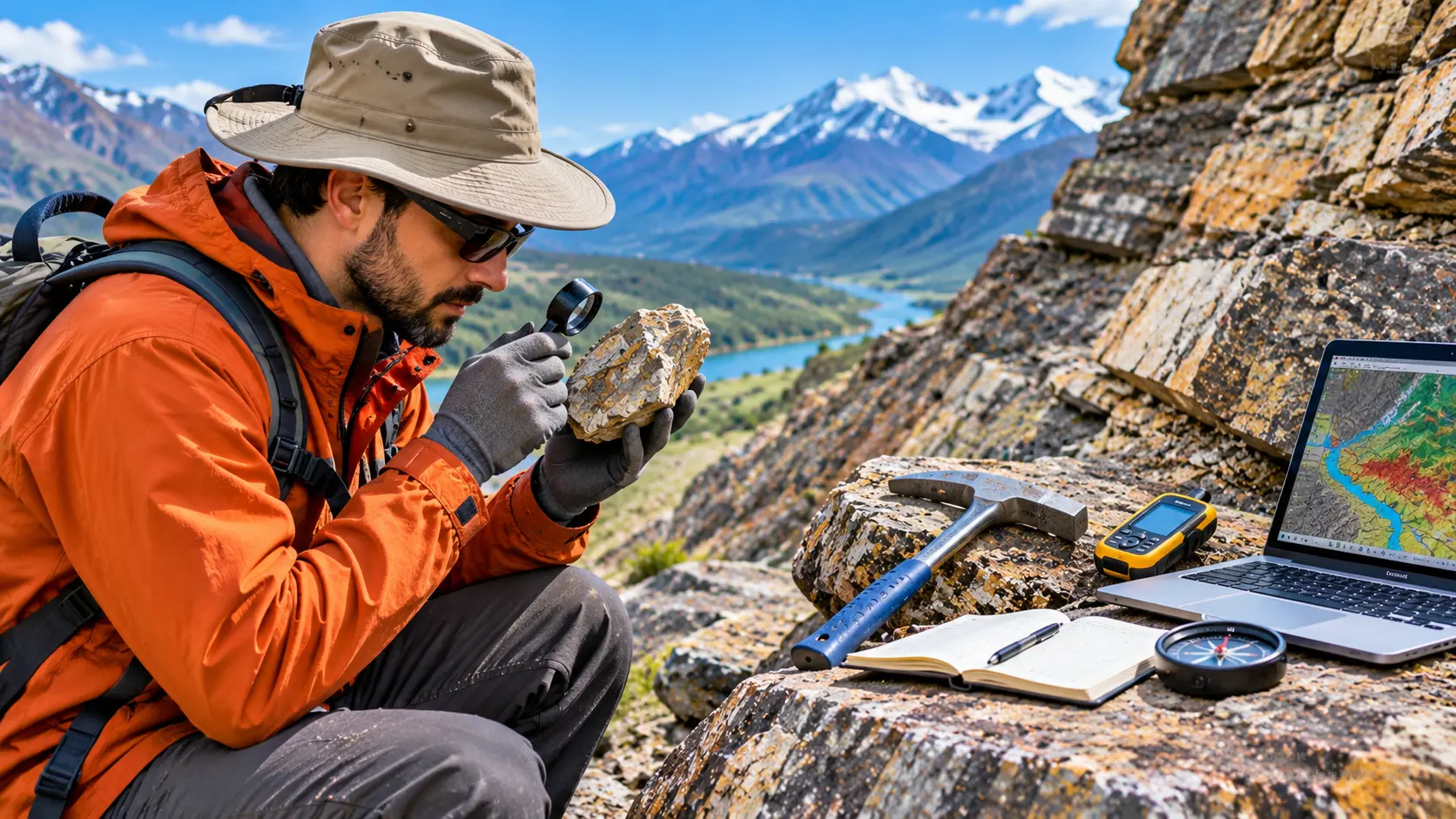
Geology Careers: Jobs, Skills and Degree Options featured image


Geology Careers: Jobs, Skills and Degree Options


Geology is the scientific study of the Earth, including its rocks, minerals, structure, history and natural processes. Geologists investigate how landscapes form, how natural resources are distributed and how geological events shape the environment. Their work supports industries such as mining, energy, construction, environmental management, water resources and scientific research.


A career in geology can involve outdoor fieldwork, laboratory testing, geological mapping, computer-based analysis or technical consulting. Some professionals explore mineral deposits, while others investigate groundwater, assess construction sites or study natural hazards. Understanding the different career paths can help students choose suitable degree programs and develop the skills needed for professional opportunities.


1. What Does a Geologist Do?


A geologist studies the materials, structures and processes that make up the Earth. Their responsibilities depend on their specialization and workplace. They may examine rock formations, collect geological samples, prepare maps, analyze laboratory results and interpret information about underground conditions.


  • Study rocks, minerals, fossils and geological formations.
  •    
  • Conduct geological field surveys and site inspections.
  •    
  • Collect and document rock, soil and mineral samples.
  •    
  • Prepare geological maps and cross-sections.
  •    
  • Analyze geological data and laboratory results.
  •    
  • Investigate mineral, energy and groundwater resources.
  •    
  • Assess geological conditions for construction projects.
  •    
  • Prepare technical reports and communicate findings.
  •  


    2. Major Areas of Geology


    Mineralogy and Petrology


    Mineralogy focuses on minerals, including their chemical composition, crystal structure and physical properties. Petrology studies rocks, their origins and the processes involved in their formation. These subjects are important in mineral exploration, geological research and understanding Earth's history.


    Structural Geology


    Structural geology examines how rocks deform and how geological structures develop. Geologists study folds, faults, fractures and other features to understand the forces that have affected rock formations. This knowledge is useful in resource exploration, engineering investigations and tectonic studies.


    Economic and Mining Geology


    Economic geology investigates natural resources that have commercial value, including metallic minerals, industrial minerals and other geological materials. Mining geologists help identify mineralized areas, evaluate deposits and understand the geological conditions of mining operations.


    Petroleum Geology


    Petroleum geology studies the geological conditions associated with oil and natural gas accumulation. Professionals examine sedimentary basins, source rocks, reservoirs, seals and geological structures to evaluate potential hydrocarbon resources.


    Engineering Geology


    Engineering geology applies geological knowledge to construction and infrastructure projects. Engineering geologists investigate soil, rock, slopes and ground conditions to help assess the suitability and safety of project sites.


    Environmental Geology


    Environmental geology examines interactions between geological materials, natural resources and human activities. Professionals may investigate contaminated land, groundwater conditions, erosion, waste disposal and geological hazards.


    Hydrogeology


    Hydrogeology focuses on groundwater, including how water moves through soil and rock, how aquifers store water and how groundwater quality changes. Hydrogeologists contribute to water supply planning, groundwater protection and environmental investigations.


    3. Popular Geology Career Options


    Geology graduates can pursue several professional roles depending on their education, technical interests and practical experience.


    • Geologist: Studies rocks, minerals, geological structures and Earth's processes.
    •    
    • Field Geologist: Conducts outdoor surveys, collects samples and records geological observations.
    •    
    • Mining Geologist: Supports mineral exploration, deposit evaluation and mining operations.
    •    
    • Petroleum Geologist: Studies sedimentary basins and geological conditions related to oil and gas resources.
    •    
    • Engineering Geologist: Evaluates geological conditions for buildings, roads, tunnels, dams and other infrastructure.
    •    
    • Environmental Geologist: Investigates soil, groundwater, contamination and environmental conditions.
    •    
    • Hydrogeologist: Studies groundwater systems, aquifers and underground water movement.
    •    
    • Geological Surveyor: Collects and interprets geological information for mapping and site investigations.
    •    
    • Geoscience Researcher: Conducts scientific studies into Earth's materials, history and processes.
    •    
    • GIS Geologist: Uses geographic information systems to organize, analyze and display geological data.
    •  


      4. Which Degree Is Required for a Geology Career?


      A bachelor's degree in geology or a related Earth science subject is a common starting point for professional geology careers. The most suitable degree depends on the area of geology a student wants to enter.


      Relevant Degree Programs


      • Bachelor of Science in Geology.
      •    
      • Bachelor of Science in Applied Geology.
      •    
      • Bachelor of Science in Earth Sciences.
      •    
      • Bachelor of Science in Geoscience.
      •    
      • Bachelor of Science in Geological Engineering.
      •    
      • Bachelor of Science in Environmental Science with geological coursework.
      •    
      • Master's degree in Economic Geology.
      •    
      • Master's degree in Petroleum Geology.
      •    
      • Master's degree in Hydrogeology.
      •    
      • Master's degree in Engineering Geology or Geophysics.
      •  


        Some specialist positions and research roles may require postgraduate education. Students should review the course structure of each university program to ensure it includes relevant subjects, laboratory work and field training.


        5. Important Subjects for Geology Students


        Geology programs combine scientific theory with practical investigation. Students generally study several subjects that help them understand the Earth's materials and processes.


        • Physical Geology: Introduces Earth's materials, structures and natural processes.
        •    
        • Mineralogy: Examines mineral identification, composition and properties.
        •    
        • Petrology: Studies igneous, sedimentary and metamorphic rocks.
        •    
        • Structural Geology: Explains folds, faults, fractures and rock deformation.
        •    
        • Stratigraphy: Studies rock layers and their relationships through geological time.
        •    
        • Paleontology: Uses fossils to understand ancient life and geological history.
        •    
        • Geomorphology: Examines landforms and the processes that shape landscapes.
        •    
        • Geochemistry: Studies the chemical composition of Earth materials.
        •    
        • Hydrogeology: Explores groundwater systems and aquifer behavior.
        •    
        • Geological Mapping: Teaches students to record and interpret geological features in the field.
        •  


          6. Essential Skills for Geologists


          Successful geologists combine scientific knowledge with observation, analytical thinking and practical investigation skills.


          Scientific Skills


          • Understanding rocks, minerals and geological processes.
          •    
          • Interpreting geological maps and cross-sections.
          •    
          • Recognizing geological structures and formations.
          •    
          • Understanding basic chemistry, physics and mathematics.
          •    
          • Analyzing geological samples and scientific measurements.
          •  


            Fieldwork Skills


            • Using a geological compass and GPS equipment.
            •    
            • Recording field observations accurately.
            •    
            • Collecting and labeling geological samples.
            •    
            • Preparing field maps and geological sketches.
            •    
            • Following outdoor work and site safety procedures.
            •  


              Digital and Technical Skills


              • Using GIS software for geological mapping.
              •    
              • Working with spreadsheets and geological datasets.
              •    
              • Understanding geological modelling applications.
              •    
              • Using remote sensing and satellite imagery where relevant.
              •    
              • Preparing clear technical reports and presentations.
              •  


                Professional Skills


                • Communication and teamwork.
                •    
                • Problem-solving and critical thinking.
                •    
                • Attention to detail.
                •    
                • Time management and organization.
                •    
                • Adaptability in field and office environments.
                •  


                  7. Software and Tools Used in Geology


                  Geologists use a combination of field equipment, laboratory instruments and computer applications. The tools vary according to the type of investigation and the employer.


                  • QGIS: Open-source software for geological mapping and spatial analysis.
                  •    
                  • ArcGIS: Used to manage geographic data and prepare professional maps.
                  •    
                  • AutoCAD: Supports technical drawings and engineering-related geological work.
                  •    
                  • Leapfrog Geo: Used for three-dimensional geological modelling and interpretation.
                  •    
                  • Petrel: Supports subsurface interpretation and modelling in energy-related workflows.
                  •    
                  • Excel: Helps organize field measurements, sample records and technical data.
                  •    
                  • GPS equipment: Helps record locations during geological field surveys.
                  •    
                  • Geological compass: Used to measure the orientation of geological structures.
                  •    
                  • Rock and mineral testing equipment: Supports sample examination and laboratory investigations.
                  •  


                    8. Industries That Hire Geologists


                    Geologists work in public and private organizations across several industries. Employment opportunities depend on regional industries, resource projects and demand for geological services.


                    • Mining: Mineral exploration, deposit evaluation and mine geology.
                    •    
                    • Oil and Gas: Petroleum exploration, basin analysis and subsurface studies.
                    •    
                    • Construction and Engineering: Ground investigations and geological risk assessment.
                    •    
                    • Environmental Consulting: Site assessments, groundwater studies and contamination investigations.
                    •    
                    • Water Resources: Aquifer evaluation, groundwater monitoring and water supply studies.
                    •    
                    • Government Geological Surveys: Geological mapping, resource assessment and Earth science research.
                    •    
                    • Education and Research: Teaching, laboratory work and scientific investigation.
                    •    
                    • Renewable Energy: Geological studies for geothermal energy and related projects.
                    •  


                      9. Fieldwork and Practical Experience


                      Fieldwork is an important part of geology education and many professional roles. It allows students and professionals to examine geological formations directly, collect samples and compare field observations with maps and scientific interpretations.


                      Common Field Activities


                      • Mapping rock formations and geological boundaries.
                      •    
                      • Measuring the orientation of bedding, joints and faults.
                      •    
                      • Collecting rock, soil and mineral samples.
                      •    
                      • Recording GPS coordinates and site observations.
                      •    
                      • Studying landforms and geological structures.
                      •    
                      • Preparing field notes, sketches and maps.
                      •  


                        Students can gain practical experience through university field camps, supervised research projects, internships and geological surveys. Field safety, accurate documentation and proper sample handling are essential throughout these activities.


                        10. How to Start a Career in Geology


                        Students interested in geology can prepare for employment by combining academic study with practical experience and technical skills.


                        1. Choose a relevant degree: Enroll in geology, applied geology, geoscience or another suitable Earth science program.
                        2.    
                        3. Build scientific foundations: Study mineralogy, petrology, structural geology, stratigraphy and related subjects.
                        4.    
                        5. Participate in fieldwork: Take part in mapping exercises, geological field camps and supervised surveys.
                        6.    
                        7. Learn digital tools: Develop skills in GIS, geological modelling and data organization.
                        8.    
                        9. Choose a specialization: Explore mining, petroleum, environmental, engineering or groundwater geology.
                        10.    
                        11. Complete practical projects: Prepare geological maps, sample descriptions and technical reports.
                        12.    
                        13. Apply for internships: Look for experience with geological surveys, mining companies, consultancies and research institutions.
                        14.    
                        15. Prepare a professional CV: Highlight fieldwork, laboratory experience, software knowledge and academic projects.
                        16.    
                        17. Apply for graduate roles: Search for graduate geologist, field geologist, junior exploration geologist and geological technician positions.
                        18.  


                          11. Geology Career Progression


                          Career development depends on technical specialization, experience, additional education and professional responsibilities. A typical progression may include:


                          1. Entry level: Geological Field Assistant, Graduate Geologist or Junior Geological Technician.
                          2.    
                          3. Early career: Field Geologist, Exploration Geologist or Junior Engineering Geologist.
                          4.    
                          5. Experienced professional: Senior Geologist, Project Geologist or Specialist Geoscientist.
                          6.    
                          7. Management level: Chief Geologist, Exploration Manager or Geological Project Manager.
                          8.    
                          9. Advanced leadership: Principal Geologist, Technical Director or Head of Geoscience.
                          10.  


                            Not every geologist follows the same career path. Some focus on technical expertise, while others move into project management, consulting, education or research.


                            12. Challenges in Geology Careers


                            Geology can be rewarding, but it also involves practical and technical challenges. Understanding these conditions can help students prepare for the realities of the profession.


                            • Remote field locations: Some projects require travel to distant or difficult-to-access areas.
                            •    
                            • Weather and terrain: Outdoor investigations may involve changing weather and challenging ground conditions.
                            •    
                            • Data uncertainty: Geological interpretations often rely on incomplete observations and indirect measurements.
                            •    
                            • Project demands: Field schedules and reporting deadlines can vary between assignments.
                            •    
                            • Technical learning: New software, survey methods and scientific developments require continuous learning.
                            •    
                            • Safety responsibilities: Field teams must follow appropriate procedures and assess site-specific risks.
                            •  


                              13. Future Opportunities in Geology


                              Geology remains important to understanding natural resources, managing land and water, planning infrastructure and studying environmental change. Mineral exploration, groundwater assessment, engineering investigations and geological hazard studies all depend on reliable Earth science information.


                              Modern technologies are also changing geological work. Geographic information systems, satellite imagery, remote sensing, three-dimensional modelling and improved data analysis tools help professionals interpret geological information in new ways.


                              Geologists who combine strong field knowledge with digital mapping, data interpretation and a clear area of specialization can prepare for opportunities across traditional and emerging areas of Earth science.


                              Frequently Asked Questions


                              1. What does a geologist do?


                              A geologist studies rocks, minerals, geological structures and Earth's processes. Their work may involve field surveys, mapping, sample analysis, resource exploration or environmental investigation.


                              2. Which degree is best for becoming a geologist?


                              A bachelor's degree in geology, applied geology, geoscience or Earth sciences is a common route into the profession. The best option depends on the student's preferred specialization.


                              3. Is mathematics important in geology?


                              Yes. Mathematics is useful for measurements, geological calculations, mapping, data analysis and modelling. The level required varies between specializations.


                              4. Do geologists work outdoors?


                              Many geologists conduct fieldwork outdoors, but the amount varies by job. Some positions involve regular site visits, while others focus more on laboratories, offices, research or computer-based analysis.


                              5. What industries employ geology graduates?


                              Geology graduates may find opportunities in mining, energy, construction, environmental consulting, groundwater management, government geological surveys and research.


                              6. Which software should geology students learn?


                              GIS tools such as QGIS and ArcGIS are useful starting points. Depending on their specialization, students may also learn geological modelling applications, spreadsheets and data analysis tools.


                              7. Can geologists work in environmental science?


                              Yes. Geologists can work on environmental site assessments, groundwater investigations, contaminated land studies, geological hazards and land restoration projects.


                              Conclusion


                              Geology offers a wide range of career opportunities for people interested in Earth's materials, natural processes and resources. From mining and petroleum exploration to engineering, groundwater management and environmental consulting, geologists contribute important scientific knowledge to many industries. A relevant degree, practical field experience, technical skills and a clear specialization can help students build a strong foundation for a professional career in geology.


                              Continue exploring: all career guides · career categories