
How Artificial Intelligence Is Changing the Future of Work
Discover how artificial intelligence is changing workplaces, transforming job roles, creating new career opportunities, and shaping the skills people will need in the future.
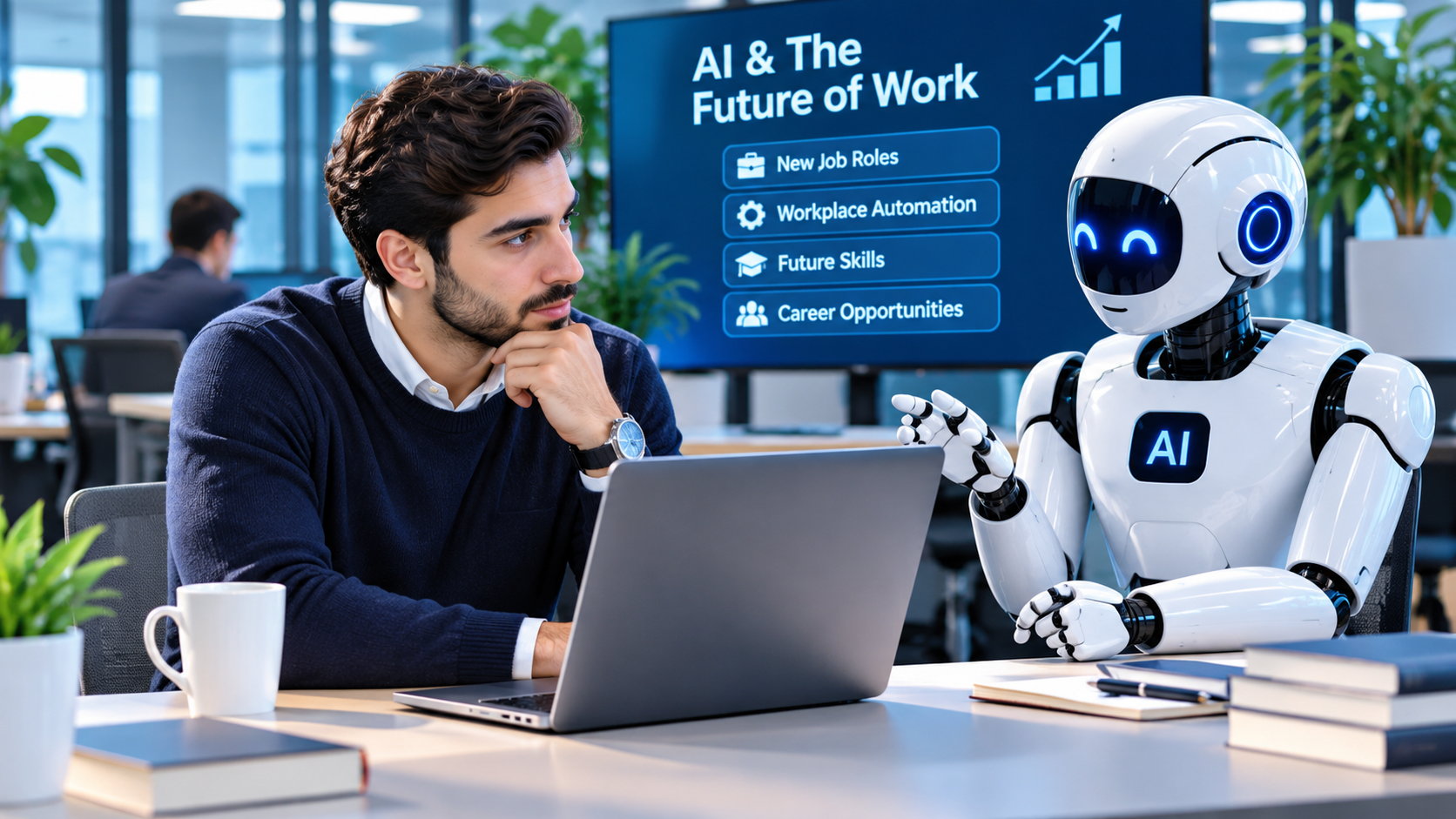
How Artificial Intelligence Is Changing the Future of Work
Artificial intelligence (AI) is changing how people work, learn, communicate, and solve problems. From helping employees analyze information to automating repetitive tasks, AI tools are becoming part of everyday business operations. These changes are creating new opportunities while encouraging workers to develop skills that complement emerging technologies.
Understanding AI is no longer useful only for software developers. Students, teachers, business owners, marketers, researchers, and professionals in many other fields can benefit from learning how these tools work and where they can be applied responsibly.
What Is Artificial Intelligence?
Artificial intelligence refers to computer systems designed to perform tasks that commonly require human intelligence. Depending on how they are built, these systems can recognize patterns, process language, summarize documents, classify information, generate content, and assist with decision-making.
Examples include chatbots that answer questions, software that detects unusual financial transactions, tools that help organize customer enquiries, and systems that assist researchers in reviewing large collections of information.
AI tools do not automatically produce correct results. Their answers may contain mistakes, outdated information, or unsupported claims. Human judgment remains important, particularly when decisions affect people's employment, finances, education, or health.
How AI Is Changing the Workplace
1. Automating repetitive tasks
AI-powered systems can help handle routine activities such as sorting information, drafting standard emails, categorizing support requests, and extracting details from documents. When these tasks are automated appropriately, employees may have more time for complex work that requires judgment, communication, and creativity.
2. Supporting research and analysis
Some AI tools can summarize long documents, organize research notes, identify patterns in datasets, and help people explore questions more quickly. Workers should still check important facts against reliable sources and verify calculations before using the results.
3. Improving customer service
Businesses can use AI assistants to respond to common questions, route requests to the right department, and help support teams find relevant information. Sensitive complaints and complicated cases may still require a trained person who understands the customer's circumstances.
4. Assisting creative work
Writers, designers, marketers, and video producers can use AI to brainstorm ideas, create initial drafts, explore design concepts, or organize production tasks. The strongest results often come from combining these tools with human originality, editing, subject knowledge, and an understanding of the audience.
Career Opportunities in AI
The growth of AI is supporting demand for a range of technical and non-technical capabilities. Specific opportunities vary by industry, location, experience, and employer requirements.
- AI and machine learning engineering: Building, testing, and maintaining AI systems.
- Data analysis: Turning datasets into useful insights for organizations.
- Software development: Creating applications that integrate AI features.
- Cybersecurity: Protecting systems and data while understanding emerging AI-related risks.
- Digital marketing: Using AI to support research, campaign planning, and content workflows.
- AI product management: Coordinating the development of products that use AI to solve practical problems.
- AI governance and evaluation: Assessing system quality, privacy, fairness, and responsible use.
Not every AI-related role requires the same background. Engineering positions may require programming, mathematics, or specialist technical knowledge, while other roles may prioritize communication, business understanding, research, design, or experience in a particular industry.
Skills That Matter in the AI Era
Learning to use AI tools can be helpful, but long-term career development requires a broader combination of skills.
Digital literacy
Understand common digital tools, online security, data handling, and the limitations of automated systems. Learn how to select tools that fit a particular task rather than relying on a single application for everything.
Critical thinking
Check whether an AI-generated answer is accurate, relevant, complete, and supported by evidence. Compare sources, identify assumptions, and recognize when a problem needs specialist advice.
Communication and collaboration
Clear writing, active listening, teamwork, and the ability to explain complex ideas remain valuable. These skills help people turn technical outputs into decisions that colleagues and customers can understand.
Adaptability and continuous learning
Technology changes quickly, so professionals benefit from regularly updating their knowledge. Small practical projects, short courses, documentation, and feedback from experienced colleagues can help build skills over time.
Challenges and Responsible Use
AI adoption also creates challenges. Some systems can produce inaccurate information, expose sensitive data if used carelessly, or reproduce biases present in their training data. Automated decisions may be difficult to explain, and organizations need to consider how new tools affect employees and customers.
Before using an AI system at work, consider whether the information entered is confidential, whether the tool is approved for that purpose, and whether a human should review the output. Avoid uploading private customer details, personal records, company secrets, or other sensitive material into tools that are not authorized to process them.
Employers should also provide appropriate training, evaluate results carefully, and make sure people understand when AI is being used. Responsible implementation focuses on solving real problems rather than adopting technology simply because it is new.
How to Prepare for the Future of Work
- Choose a practical goal. Identify one task in your studies or work that could benefit from an AI tool.
- Learn the fundamentals. Understand the tool's capabilities, limitations, privacy settings, and appropriate uses.
- Build a small project. For example, create a research summary, organize a sample dataset, or develop a draft workflow using non-sensitive information.
- Verify the results. Check facts, test the output, and document errors or limitations.
- Develop complementary skills. Improve writing, analysis, problem-solving, teamwork, or technical knowledge relevant to your field.
- Keep a record of your work. Document the problem, your approach, the tools used, and what you learned. This can help demonstrate practical experience to potential employers.
Students and early-career professionals can begin with free learning materials, introductory programming exercises, or guided projects. Experienced workers can start by identifying repetitive tasks in their current roles and learning how to evaluate AI-assisted workflows safely.
Conclusion
Artificial intelligence is changing the way many organizations approach research, communication, customer service, and routine work. It can create useful opportunities, but its results still need human oversight, and its effects will differ across occupations and industries.
The most practical way to prepare is to combine AI literacy with strong professional skills, responsible judgment, and continuous learning. Rather than trying to master every new tool, focus on understanding how technology can help you solve meaningful problems in your chosen field.
Continue exploring: all career guides · career categories