
Mining Geology vs Petroleum Geology
Compare mining geology and petroleum geology careers, including their job responsibilities, work environments, qualifications, technical skills and opportunities in the natural resources industry.
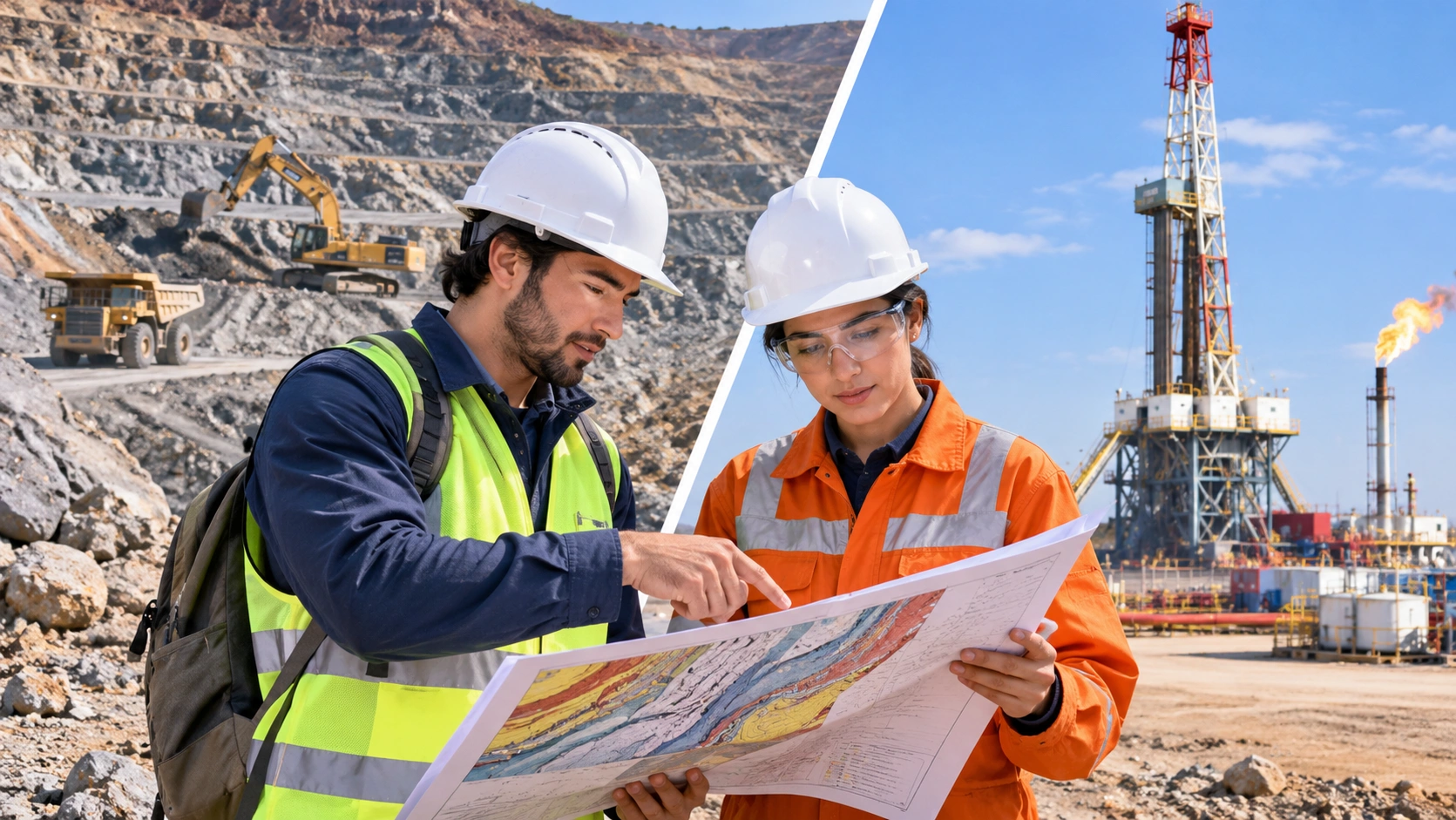
Mining Geology vs Petroleum Geology
Mining geology and petroleum geology are two important specializations within Earth science. Both focus on understanding geological formations and locating valuable natural resources, but they investigate different materials and operate in different industry environments. Mining geologists study mineral deposits and help companies extract resources such as copper, gold, iron ore and lithium. Petroleum geologists investigate underground rock formations to identify oil and natural gas reservoirs.
Both careers combine geological knowledge, field investigation, laboratory analysis and modern technology. However, their daily responsibilities, exploration methods, software requirements and work locations can differ considerably. Understanding these differences can help geology students and graduates decide which specialization best matches their interests and career goals.
1. What Is Mining Geology?
Mining geology is the branch of geology concerned with identifying, evaluating and understanding mineral deposits that may have economic value. Mining geologists investigate rocks, minerals, geological structures and ore bodies to determine where useful mineral resources occur and how they are distributed.
Their work supports mineral exploration, mine planning, extraction operations and resource evaluation. They provide geological information that helps mining companies understand the size, quality and geological characteristics of a deposit.
Main Responsibilities of Mining Geologists
2. What Is Petroleum Geology?
Petroleum geology focuses on the geological conditions that allow oil and natural gas to form, accumulate and remain trapped underground. Petroleum geologists study sedimentary basins, source rocks, reservoir rocks, seals and geological structures to evaluate potential hydrocarbon resources.
Their investigations help exploration teams understand where hydrocarbons may be located and whether a geological formation could contain a commercially useful reservoir. They work with geophysicists, drilling engineers, reservoir engineers and other energy professionals.
Main Responsibilities of Petroleum Geologists
3. Mining Geology vs Petroleum Geology: Key Differences
Although both specializations involve geological exploration, they focus on different natural resources and use different investigation methods.
| Area | Mining Geology | Petroleum Geology |
|---|---|---|
| Main focus | Metallic and non-metallic mineral deposits | Oil and natural gas reservoirs |
| Resources studied | Gold, copper, iron ore, lithium and other minerals | Crude oil and natural gas |
| Typical geology | Igneous, metamorphic and sedimentary mineral systems | Primarily sedimentary basins and petroleum systems |
| Exploration methods | Geological mapping, sampling, drilling and geochemical analysis | Seismic interpretation, well logging, basin analysis and geological modelling |
| Work environments | Open-pit mines, underground mines and exploration areas | Offices, exploration sites, drilling locations and offshore facilities |
| Industry | Mining and mineral resources | Oil and gas exploration and production |
| Common software | GIS, geological modelling and mine planning tools | Seismic interpretation, subsurface modelling and geological software |
4. Major Areas of Mining Geology
Mineral Exploration
Mineral exploration involves searching for deposits that may contain economically valuable minerals. Geologists study geological maps, surface exposures, geochemical information and geophysical survey results to identify promising areas.
Ore Deposit Evaluation
Ore deposit evaluation examines the geological characteristics, distribution and quality of a mineral deposit. Geological information from drilling, sampling and laboratory analysis helps specialists understand the deposit and support resource evaluation.
Mine Geology
Mine geologists work with operating mines to provide geological information during extraction. They monitor ore boundaries, examine exposed rock formations and help distinguish mineralized material from surrounding waste rock.
Geological Modelling
Geological modelling uses drilling data, mapping and other geological information to create three-dimensional representations of mineral deposits. These models help technical teams understand the shape, continuity and distribution of ore bodies.
5. Major Areas of Petroleum Geology
Petroleum Exploration
Petroleum exploration investigates geological areas that may contain oil and natural gas. Geologists examine basin history, rock formations, structural features and geophysical information to identify potential hydrocarbon prospects.
Seismic Interpretation
Seismic interpretation involves studying geophysical data to understand underground geological structures. Seismic images can help identify faults, folds and formations that may influence the location of hydrocarbon reservoirs.
Well Logging and Formation Evaluation
Well logging provides measurements from boreholes that help specialists evaluate underground formations. Petroleum geologists interpret these measurements alongside rock samples and other well information to understand reservoir characteristics.
Reservoir Characterization
Reservoir characterization examines the geological properties of formations that may contain hydrocarbons. It considers factors such as rock type, porosity, permeability and the distribution of reservoir layers.
6. Popular Mining Geology Job Roles
7. Popular Petroleum Geology Job Roles
8. Qualifications Required for Both Careers
A relevant university education is an important starting point for professional geology careers. Employers commonly look for graduates with a background in geology, Earth science or a related discipline. Advanced technical and research positions may require postgraduate qualifications.
Relevant Degree Programs
Mining-focused postgraduate programs may emphasize mineral deposits, ore geology and exploration. Petroleum-focused programs may concentrate on sedimentary basins, petroleum systems, seismic interpretation and reservoir geology.
9. Essential Skills for Mining Geologists
Mining geologists need strong field investigation abilities and an understanding of mineral deposits, rocks and geological structures.
10. Essential Skills for Petroleum Geologists
Petroleum geologists need a strong understanding of sedimentary geology and the geological processes that control hydrocarbon accumulation.
11. Software and Technical Tools
Both careers increasingly use digital tools to organize geological information, interpret exploration results and create geological models. The software used depends on the employer, project and specialization.
Tools Used in Mining Geology
Tools Used in Petroleum Geology
Software availability and employer requirements vary. Students should focus first on geological fundamentals before selecting tools for a particular specialization.
12. Work Environments and Lifestyle
Mining and petroleum geology can involve a combination of office work, field investigations and industrial site visits. The balance depends on the employer, project stage and job responsibilities.
Mining Geology Work Environment
Mining geologists may work at open-pit mines, underground operations, exploration camps, laboratories and corporate offices. Field assignments can involve geological mapping, sample collection, drill core logging and site inspections. Some positions require working in remote locations or following mine-site shift schedules.
Petroleum Geology Work Environment
Petroleum geologists often work in technical offices and exploration teams, interpreting seismic information, well logs and geological models. Some professionals travel to drilling locations or offshore facilities. Wellsite roles may involve rotational schedules and extended periods at remote operational sites.
13. Industries and Employers
Mining Geology Employers
Petroleum Geology Employers
14. How to Start a Career in Mining or Petroleum Geology
Students can prepare for either career by developing a strong understanding of geology and gaining practical experience. The most useful preparation depends on the specialization they want to pursue.
15. Career Progression
Both specializations offer opportunities to develop into senior technical and management positions. Progression depends on experience, professional competence, project responsibilities and additional training.
Mining Geology Career Path
Petroleum Geology Career Path
16. Challenges in Mining and Petroleum Geology
Both fields involve complex geological conditions, uncertain exploration results and operational challenges. Professionals must interpret available evidence carefully and communicate technical risks to project teams.
Mining Geology Challenges
Petroleum Geology Challenges
17. Future Opportunities in Both Fields
Mining and petroleum geology continue to evolve as exploration technology, resource demand and energy systems change. Mining geologists are involved in exploring minerals used in construction, manufacturing, electronics and energy technologies. Mineral exploration can include resources such as copper, lithium, nickel and other metals.
Petroleum geologists continue to contribute to subsurface evaluation, reservoir studies and responsible resource development. Their geological expertise can also be relevant to areas such as carbon storage assessment and subsurface energy projects.
Digital geological modelling, improved geophysical interpretation, automation and data analysis are changing how exploration teams evaluate underground resources. Professionals who combine strong geological knowledge with modern technical skills can prepare for changing industry requirements.
Frequently Asked Questions
1. What is the main difference between mining geology and petroleum geology?
Mining geology focuses on mineral deposits such as gold, copper and iron ore, while petroleum geology studies underground formations that may contain oil and natural gas.
2. Which degree is required for mining and petroleum geology?
A degree in geology, applied geology, Earth science or geoscience is a common starting point. Specialized postgraduate education can help candidates develop advanced knowledge in mineral exploration or petroleum geology.
3. Do mining geologists work at mine sites?
Many mining geologists visit or work at exploration and operating mine sites. Their responsibilities may include mapping, sampling, drill core logging and monitoring geological conditions.
4. Do petroleum geologists work offshore?
Some petroleum geology positions involve offshore operations or visits to drilling facilities, but many professionals work in offices and technical centers analyzing subsurface information.
5. Which software is useful for mining geology?
GIS tools, Leapfrog Geo, Surpac, Datamine and spreadsheet applications can support mapping, geological modelling and exploration data management.
6. Which software is useful for petroleum geology?
Petrel, Kingdom, Techlog and other subsurface interpretation tools are used in different petroleum geology workflows. Requirements depend on the employer and position.
7. Can a mining geologist move into petroleum geology?
A transition may be possible with additional study and relevant experience. Professionals would need to develop knowledge of sedimentary geology, petroleum systems, well logs and subsurface interpretation.
8. Which career is better for geology graduates?
Neither career is universally better. Mining geology may suit people interested in minerals, ore deposits and mine operations, while petroleum geology may suit those interested in sedimentary basins, subsurface formations and hydrocarbon exploration.
Conclusion
Mining geology and petroleum geology offer two distinct career paths within the Earth sciences. Mining geologists investigate mineral deposits and support exploration and extraction, while petroleum geologists study subsurface formations and evaluate potential oil and gas reservoirs. Both fields require strong geological fundamentals, analytical thinking, field or technical experience and the ability to interpret complex data.
Students and graduates should consider their scientific interests, preferred work environments and long-term goals when choosing between these specializations. Developing practical experience and learning relevant geological software can help prepare them for professional opportunities in the natural resources industry.
Continue exploring: all career guides · career categories