Artificial Intelligence

Robotics Careers: Engineering, Software and Automation

Explore robotics careers in engineering, software development and automation. Learn about robotics jobs, essential technical skills, qualifications, industry applications and career growth opportunities.
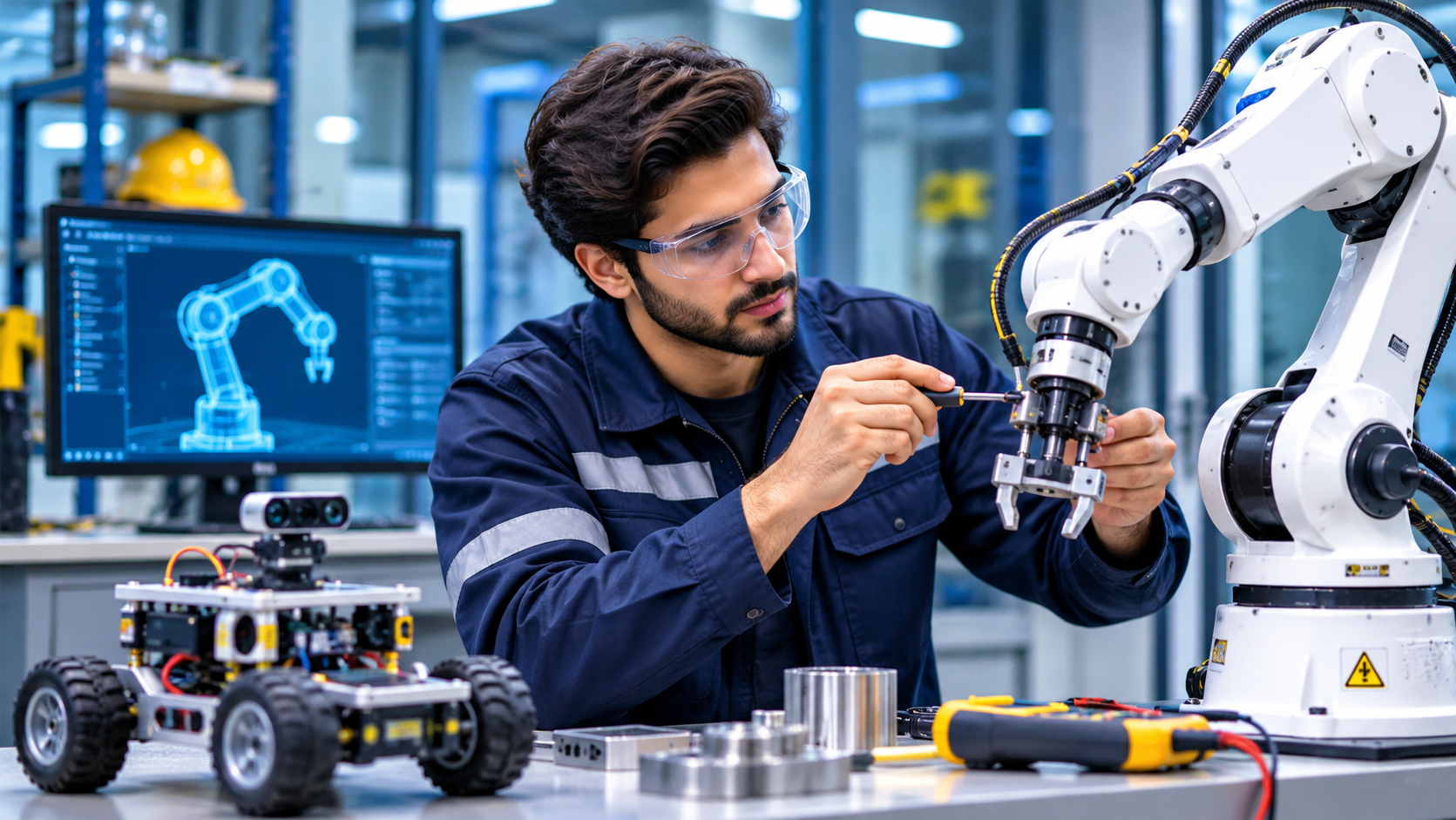
Robotics Careers: Engineering, Software and Automation featured image


Robotics Careers: Engineering, Software and Automation


Robotics is transforming industries by combining mechanical engineering, electronics, computer science and intelligent software. Robots are used in manufacturing, healthcare, agriculture, logistics, research and many other fields. As automation becomes more advanced, robotics professionals play an important role in designing, programming, testing and maintaining these systems.


Robotics careers offer opportunities for people interested in building machines, developing software and solving complex engineering problems. From designing robotic arms to programming autonomous systems, professionals can choose different specializations based on their education, interests and technical abilities.


1. What Is Robotics Engineering?


Robotics engineering is an interdisciplinary field focused on designing, building, programming and operating robots. It combines several engineering and technology disciplines to create machines that can perform tasks automatically or with human assistance.


A robotics system may include mechanical components, electronic circuits, sensors, motors, controllers and software. Engineers work together to make these components operate safely, accurately and efficiently.


2. Major Areas of Robotics Careers


Robotics Engineering


Robotics engineers design and develop robotic machines for industrial, commercial and research applications. They work with mechanical structures, actuators, sensors and control systems.


  • Design robotic mechanisms and machine components.
  •    
  • Develop and test robotic prototypes.
  •    
  • Integrate motors, sensors and controllers.
  •    
  • Improve robot movement, accuracy and performance.
  •    
  • Identify and resolve mechanical or technical problems.
  •  


    Robotics Software Development


    Robotics software developers create the programs that control how robots move, respond to their surroundings and complete tasks. They work with programming languages, algorithms and robotics software frameworks.


    • Write and test software for robotic systems.
    •    
    • Develop algorithms for navigation and movement.
    •    
    • Connect software with sensors and hardware.
    •    
    • Debug programming errors and improve system performance.
    •    
    • Develop software for autonomous and semi-autonomous robots.
    •  


      Industrial Automation


      Industrial automation specialists develop and maintain systems that use machines, sensors and controllers to perform manufacturing tasks. Their work helps factories improve production consistency, efficiency and operational safety.


      • Install and configure automated production equipment.
      •    
      • Program industrial controllers and robotic systems.
      •    
      • Monitor automated production processes.
      •    
      • Diagnose equipment faults and technical issues.
      •    
      • Support maintenance and system upgrades.
      •  


        Control Systems Engineering


        Control systems engineers develop systems that regulate the movement and behavior of machines. In robotics, control systems help robots maintain accurate positions, speeds and movements.


        • Design control systems for robotic equipment.
        •    
        • Analyze system responses and performance.
        •    
        • Configure sensors, motors and controllers.
        •    
        • Test motion accuracy and system stability.
        •  


          Artificial Intelligence and Autonomous Robotics


          Artificial intelligence is increasingly used in robotics to help machines interpret information, recognize objects and make decisions. Autonomous robotics professionals work on systems that can perform tasks with limited human intervention.


          • Develop computer vision applications.
          •    
          • Work with machine learning algorithms.
          •    
          • Improve robot navigation and object recognition.
          •    
          • Develop systems for autonomous operation.
          •    
          • Test intelligent robotic applications.
          •  


            3. Popular Robotics Job Roles


            Robotics employers recruit professionals for technical, engineering, software and maintenance positions. Common job titles include:


            • Robotics Engineer: Designs, builds and tests robotic machines and systems.
            •    
            • Robotics Software Engineer: Develops programs and algorithms that control robots.
            •    
            • Automation Engineer: Designs and maintains automated industrial processes.
            •    
            • Robotics Technician: Installs, tests, repairs and maintains robotic equipment.
            •    
            • Control Systems Engineer: Develops systems that regulate machine movement and operation.
            •    
            • Mechatronics Engineer: Combines mechanical, electrical and computer engineering in integrated systems.
            •    
            • Computer Vision Engineer: Develops systems that help machines interpret images and visual information.
            •    
            • Research Engineer: Investigates new robotics technologies and develops experimental systems.
            •  


              4. Qualifications Required for Robotics Careers


              Educational requirements depend on the job role and employer. Many engineering positions require a relevant bachelor's degree, while specialized research and advanced development roles may require postgraduate qualifications.


              Relevant Degree Programs


              • Bachelor's degree in Robotics Engineering.
              •    
              • Bachelor's degree in Mechanical Engineering.
              •    
              • Bachelor's degree in Electrical or Electronics Engineering.
              •    
              • Bachelor's degree in Mechatronics Engineering.
              •    
              • Bachelor's degree in Computer Science or Software Engineering.
              •    
              • Master's degree in Robotics, Automation or Control Systems for advanced specializations.
              •  


                Students should choose a program that includes mathematics, programming, electronics, mechanical systems and practical engineering projects. Employers may also consider technical experience and demonstrated project skills.


                5. Essential Technical Skills for Robotics Professionals


                Robotics professionals need a combination of engineering knowledge, programming ability and practical problem-solving skills.


                Programming Skills


                • Python for automation, data processing and robotics applications.
                •    
                • C and C++ for embedded systems and performance-focused software.
                •    
                • Basic software development and debugging practices.
                •    
                • Understanding of algorithms and data structures.
                •  


                  Engineering Skills


                  • Mechanical design and component selection.
                  •    
                  • Electronics and circuit fundamentals.
                  •    
                  • Motors, actuators and sensor integration.
                  •    
                  • Control systems and motion planning.
                  •    
                  • CAD design and technical documentation.
                  •  


                    Additional Professional Skills


                    • Analytical thinking and problem-solving.
                    •    
                    • Teamwork across different engineering disciplines.
                    •    
                    • Project planning and time management.
                    •    
                    • Technical communication and documentation.
                    •    
                    • Attention to safety and testing procedures.
                    •  


                      6. Robotics Tools and Technologies


                      Robotics professionals use different tools depending on their specialization and the systems they develop. Some commonly used technologies include:


                      • Robot Operating System (ROS): A widely used framework and set of software libraries for developing robotics applications.
                      •    
                      • Python and C++: Programming languages used in robotics software and embedded applications.
                      •    
                      • MATLAB and Simulink: Tools for modeling, simulation and control system development.
                      •    
                      • CAD software: Used to design and model mechanical components and robotic structures.
                      •    
                      • PLC systems: Programmable logic controllers used in industrial automation.
                      •    
                      • Computer vision libraries: Tools used to process images and help robots recognize objects.
                      •  


                        7. Industries That Employ Robotics Professionals


                        Robotics technology is used across many industries. This creates career opportunities for professionals with different engineering and software backgrounds.


                        • Manufacturing: Robotic arms, assembly systems, welding and automated inspection.
                        •    
                        • Healthcare: Surgical assistance, rehabilitation equipment and laboratory automation.
                        •    
                        • Automotive: Vehicle assembly, component handling and quality inspection.
                        •    
                        • Agriculture: Automated planting, crop monitoring and precision farming equipment.
                        •    
                        • Logistics: Warehouse robots, sorting systems and automated material handling.
                        •    
                        • Aerospace: Robotic inspection, manufacturing and specialized research systems.
                        •    
                        • Research and education: Experimental robotics, autonomous systems and engineering development.
                        •  


                          8. How to Start a Career in Robotics


                          Building a robotics career requires a strong technical foundation and practical experience. Students and beginners can follow these steps:


                          1. Build a mathematics foundation: Study algebra, geometry, calculus and basic physics.
                          2.    
                          3. Learn programming: Start with Python and develop basic programming projects.
                          4.    
                          5. Understand electronics: Learn about circuits, sensors, motors and microcontrollers.
                          6.    
                          7. Study mechanical systems: Understand movement, forces, gears and mechanical design.
                          8.    
                          9. Explore robotics tools: Practice with simulation software and robotics development frameworks.
                          10.    
                          11. Build practical projects: Create simple robots, automated devices or sensor-based systems.
                          12.    
                          13. Gain experience: Apply for internships, research placements and entry-level technical positions.
                          14.    
                          15. Create a portfolio: Document projects, programming work and engineering achievements.
                          16.  


                            9. Robotics Career Progression


                            Robotics professionals can progress into senior technical, research, project management and engineering leadership positions. Career development depends on experience, specialization, professional performance and continued learning.


                            1. Entry level: Robotics Technician, Junior Engineer or Engineering Assistant.
                            2.    
                            3. Early career: Robotics Engineer, Automation Engineer or Robotics Software Developer.
                            4.    
                            5. Experienced professional: Senior Robotics Engineer, Control Systems Specialist or Technical Lead.
                            6.    
                            7. Management level: Robotics Project Manager, Engineering Manager or Automation Manager.
                            8.    
                            9. Advanced leadership: Robotics Research Director, Head of Engineering or Director of Automation.
                            10.  


                              Some professionals also choose to specialize in autonomous vehicles, industrial robotics, medical robotics, artificial intelligence or research and development.


                              10. Future Opportunities in Robotics


                              Robotics continues to evolve as advances in artificial intelligence, sensors, computing and mechanical engineering make machines more capable. Autonomous mobile robots, collaborative robots, medical robotics and intelligent manufacturing systems are important areas of development.


                              Professionals who understand both engineering fundamentals and modern software technologies can explore opportunities across different industries. Continuous learning is important because robotics tools, hardware platforms and development methods change over time.


                              Frequently Asked Questions


                              1. Is robotics a good career choice?


                              Robotics can be a suitable career for people interested in engineering, programming, automation and technology. Career opportunities depend on education, practical skills and industry requirements.


                              2. What degree is best for a robotics career?


                              Robotics engineering, mechatronics, mechanical engineering, electrical engineering and computer science are relevant degree options. The best choice depends on the type of robotics work you want to pursue.


                              3. Which programming languages are useful in robotics?


                              Python, C and C++ are widely used in robotics development. Other tools and languages may be required depending on the hardware, software framework and application.


                              4. Can computer science graduates work in robotics?


                              Yes. Computer science graduates can pursue robotics software, artificial intelligence, computer vision and autonomous systems roles. Learning electronics, control systems and robotics fundamentals can strengthen their technical background.


                              5. What does a robotics technician do?


                              A robotics technician installs, tests, maintains and repairs robotic equipment. The role may include troubleshooting sensors, motors, wiring, controllers and mechanical components.


                              6. Which industries hire robotics engineers?


                              Manufacturing, automotive, healthcare, agriculture, logistics, aerospace and research organizations employ robotics professionals for different engineering and automation activities.


                              Conclusion


                              Robotics careers combine engineering, software development and automation to create practical solutions for modern industries. Professionals can work in robotic design, programming, industrial systems, control engineering and intelligent automation. By developing strong technical foundations, gaining hands-on experience and continuing to learn new technologies, aspiring professionals can prepare for a wide range of opportunities in robotics.


                              Continue exploring: all career guides · career categories